Winter Back Pain: Why Cold Weather Makes Symptoms Worse and What Helps

Cold mornings announce themselves in the lower back. You swing your legs out of bed and the first few steps feel stiff, slow and slightly unwilling. Nothing dramatic has happened overnight — the weather has simply changed, and your spine has noticed. If your back pain follows the seasons, you are not imagining it, and you are certainly not alone in it. The useful question is not whether winter makes backs ache, but what you can do about it between now and spring.
What cold, damp weather actually does to your back
Cold affects the body in a few predictable ways. Muscles tighten and shorten as they cool, and blood flow to the outer layers of tissue drops as your body prioritises keeping your core warm. Joint fluid becomes thicker and less free-moving, which is why a knee or a lumbar spine can feel creaky first thing on a frosty morning and easier by mid-afternoon.
Nerves also tend to be more irritable when tissues around them are tight and cold. That helps explain why an old injury that has been quiet for months can suddenly make itself felt in January.
Weather and pain research is genuinely mixed, so treat sweeping claims with caution. What is clear is that the behaviour that comes with cold weather matters enormously: we move less, sit more, and spend hours in positions our backs do not love.
Why winter routines work against your spine
Think about how a typical December day differs from a June one. The walk after dinner gets cancelled because it is dark and wet. The commute involves more sitting in a cold car or a crowded bus. Evenings are spent on the sofa under a blanket, often twisted towards a laptop or a television.
Add the small physical jobs winter brings — de-icing the car, carrying logs, clearing a path, hauling shopping through rain — and you have a recipe for a back that is simultaneously stiffer and being asked to do more lifting than usual. Cold muscles plus an awkward bend is a common route to a flare-up.
There is a psychological layer too. When you are worried about slipping on wet leaves or ice, you shorten your stride, tense your shoulders and grip your core tightly. That protective tension is understandable, but held for hours it leaves the lower back feeling battered.
Warmth, from the inside out
Keeping the area warm is the simplest intervention available, and it works best when you start before the pain does.
- Dress the lower back. A thermal base layer or a vest that covers the lumbar area does more than a thick coat that stops at the waist.
- Warm up before you go out. Sixty seconds of marching on the spot and a few gentle trunk rotations make a real difference before you step into the cold.
- Shower or bathe before stretching. Warm tissue tolerates movement far better than cold tissue. Stretching a cold back first thing, straight out of bed, often makes stiffness worse.
- Use heat sensibly. A hot water bottle or heat pad for fifteen to twenty minutes is soothing. Wrap it in a cloth, never place it directly on skin, and avoid falling asleep on it.
- Keep the house reasonable. A bedroom that drops very cold overnight leaves you stiff by morning; a slightly warm room and a decent duvet help.
Move more than you think you need to
The single most effective winter habit is unglamorous: move often, in small amounts. Frequency beats intensity when your back is grumpy.
- Break up sitting every 30 to 45 minutes. Stand, walk to the kitchen, refill your water bottle. Two minutes is enough.
- Walk daily, whatever the weather. A waterproof coat and decent shoes remove most excuses. Twenty minutes outdoors usually beats twenty minutes on the sofa.
- Use stairs when you can. They load the hips and legs, which takes strain off the lumbar spine.
- Try gentle mobility daily. Cat-cow, pelvic tilts, knee rolls and a supported lying twist keep the spine moving without loading it heavily.
- Build strength twice a week. Glute bridges, bird-dog, dead-bug and sit-to-stand repetitions strengthen the muscles that support your back. Start easy and progress slowly.
If you are unsure which movements suit your situation, a physiotherapist or your GP can advise on a programme tailored to you.
Winter-proof your home, car and workspace
At home
Good lighting matters more than people expect. Fumbling in the dark, bending awkwardly to find something and stepping over clutter all increase the chance of a tweak. Keep paths, hallways and stairs clear and well lit, and keep a pair of supportive indoor shoes by the door — slippers offer almost no support.
At your desk
Screen at eye level, feet flat, elbows roughly at ninety degrees. If you work from home in a cold room, sit near a radiator rather than huddled under a blanket with your neck bent forward. A small cushion in the small of your back helps if your chair is not adjustable.
Outdoors
When clearing snow, paths or leaves, warm up first, keep the load close, bend at the knees and hips rather than the waist, and switch sides regularly. Push rather than lift where possible. Never twist while holding something heavy — turn your feet instead.
Footwear deserves a mention. Grippy soles with a low, stable heel reduce the fear of slipping, and a confident stride is a freer one.
When to seek professional advice
Most winter back pain settles with warmth, movement and patience. Some symptoms need prompt attention, however. Speak to a doctor or seek urgent care if you notice new numbness around the groin or saddle area, loss of bladder or bowel control, progressive weakness in a leg, back pain following a fall, or pain accompanied by fever, unexplained weight loss, or pain that wakes you repeatedly at night. These are uncommon, but they should not wait.
For persistent pain lasting more than a few weeks, or pain that is limiting your daily life, a GP, physiotherapist or other qualified clinician can assess you properly. Nothing here replaces individual medical advice.
Your simple winter back plan
Keep it small enough that you will actually do it. Each morning, warm up before you head outdoors and run through two minutes of gentle mobility. Each day, walk once, whatever the weather. Each evening, break up your sitting and stretch lightly in a warm room. Each week, do two short strength sessions and check that your desk, shoes and lighting are not working against you.
Winter is not something to endure with a stiff back until the clocks change. A little warmth, a lot of small movement and a few sensible adjustments usually make the season far kinder to your spine.
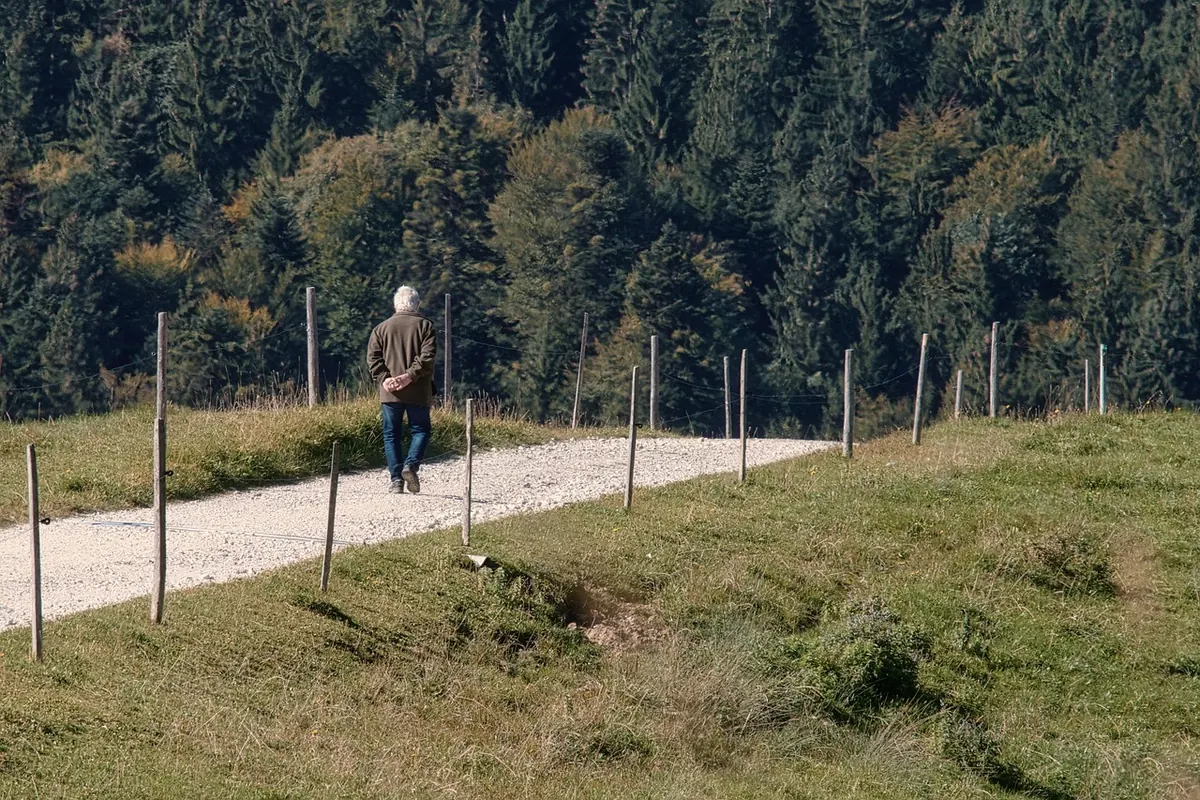
Photo: Squirrel_photos / Pixabay